The Word of the Day is "Derivative"

Matt on the WordPress.org blog:

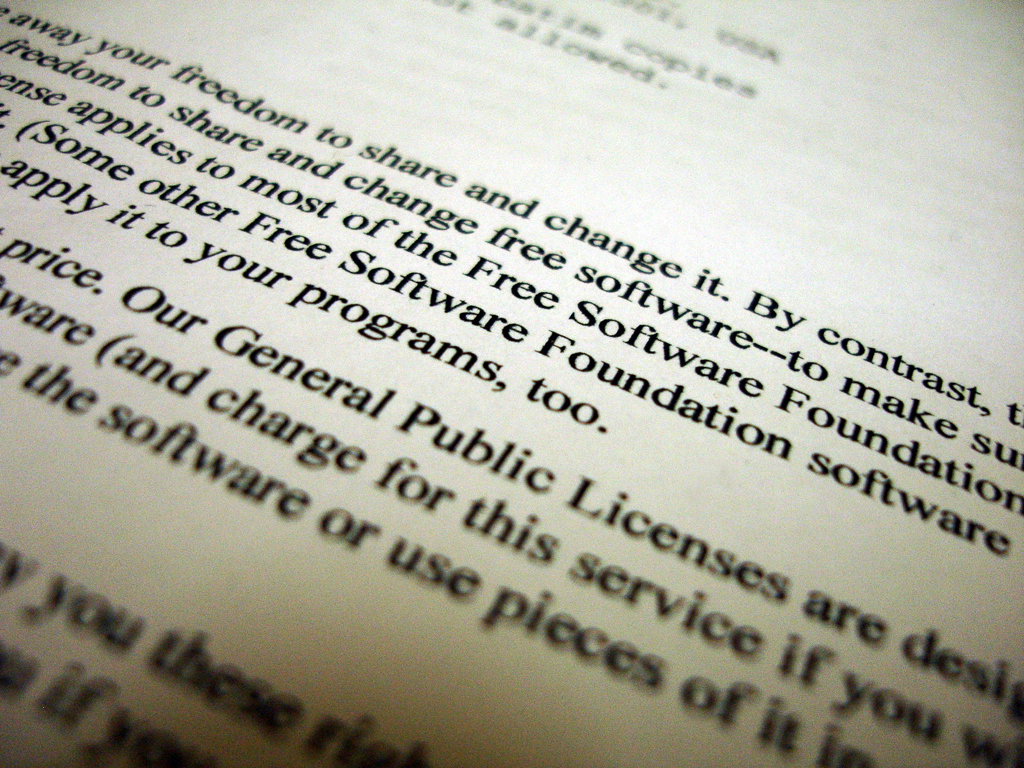
If WordPress were a country, our Bill of Rights would be the GPL because it protects our core freedoms. We’ve always done our best to keep WordPress.org clean and only promote things that are completely compatible and legal with WordPress’s license. There have been some questions in the community about whether the GPL applies to themes like we’ve always assumed. To help clarify this point, I reached out to the Software Freedom Law Center, the world’s preeminent experts on the GPL, which spent time with WordPress’s code, community, and provided us with an official legal opinion. One sentence summary: PHP in WordPress themes must be GPL, artwork and CSS may be but are not required.

This has been a discussion in the WordPress community for a little while now, with the rise of both sponsored and commercial themes and the authors of many of those themes claiming full copyright or a subset of Creative Commons over them in order to protect them from redistribution or changes. I’m pleased to see that there’s an authoritative word on it now, and also pleased to know that the WordPress theme directory (and as of 2.8, in-admin theme browser) will only contain themes that are licensed by the GPL or are GPL-compatible (for WordPress, this also means making the CSS and Javascript GPL).

The WordPress.org site now even has a directory of those theme developers/development houses that are selling GPL themes—there have been a couple of groups switching their licenses as of late—to help promote them and support their decision to embrace the GPL as a license structure for their themes. That’s a great idea, and I hope it convinces other theme authors to make the switch.

Some people might argue that it’s impossible to create a business structure based around something that is GPL-licensed, but if you take a good look around, there are many companies who now fully embrace open source (using the GPL, LGPL, GFDL, or even the OSL) as a way of life and a way of doing business who are doing quite well in offering consulting or expanded support, selling a base or preconfigured package, or offering other services that are built upon or extrude from their contribution to the open source community. Doing business this way earns you points, contributes to the Internet community as a whole, and gains you the support of dedicated volunteers to help make your product better. What’s not to like?

Brian Gardner points out:

This also clearly illustrates Matt’s view that people can (and will be endorsed if they do with it with the GPL License) make money using WordPress.

Of course they can. Automattic makes money using WordPress. There’s a virtual army of consultants out there who make money using WordPress. I’ve made money using WordPress. And the endorsement area on WordPress.org is no small beans. I believe that listing page will prove to be lucrative for those theme houses who have chosen to go GPL.

UPDATE: Daniel Jalkut speaks to the GPL as an imposition on those who might want to make contributions to a project:

Speaking of GPL succeses, WordPress is itself an example of monumental success. All of its developers have something to be immensely proud of. But whenever I am reminded that WordPress is GPL, my passion for it takes a bit of a dive. I’m more comfortable with the true freedom of liberally-licensed products. If a liberally-licensed blog system of equal quality, ease of use, and popularity should appear, my loyalties to WordPress would not last long. It’s your party, and you’re entitled to write the guest list. But take a look around the room: not as many folks as you’d hoped for? Liberally-licensed projects are booming. Speaking for myself, a developer who has been to all the parties, I’m much more likely to pass through the door that doesn’t read “GPL Only.”

His objections and points are noteworthy. One of the things that popped into my mind, however, is that WordPress is—for good or ill—bound by the GPL to remain GPL-licensed, as WordPress itself is a derivative of b2/cafelog, which was licensed under the terms of the GPL. (I think that’s how it works; I’m far from a GPL expert.)

UPDATE TO THE UPDATE: Matt responds to Daniel’s feelings regarding the GPL and restrictiveness:

It’s user freedom that the GPL was created to protect, just like the Bill of Rights was created to protect the people, not the President. The GPL introduces checks and balances into an incredibly imbalanced power dynamic, that between a developer and his/her product’s users. The only thing the GPL says you can’t do is take away the rights of your users in your work or something derived from a GPL project, that the user rights are unalienable. You are free to do pretty much whatever you want as long as it does not infringe on the freedoms of others. (Sound familiar?)

That’s what software freedom means to me, and it’s something I believe in strongly enough to fight for and defend even when it’s not the easy or popular thing to do. (Especially this weekend as we celebrate the original “fork” of the US from from England.)

(Photo credit: Untitled by flickr user elloa.)

It Shouldn't Take a Genius

Kroc Camen posts up a slice of code to utilize the new HTML 5 video tag with graceful degradation for browsers that don’t support HTML 5 video yet:

Video for Everybody is very simply a chunk of HTML code that embeds a video into a website using the HTML5 video element which offers native playback in Firefox 3.5 and Safari 3 & 4.

[…]

In other browsers that do not support video, it falls back to Adobe Flash:

[…]

If Flash is not installed, QuickTime is used:

[…]

If QuickTime is not installed then Windows Media Player is used in Internet Explorer for Windows Vista and above. This means that it is actually almost impossible for the video to not play in IE on Vista / Windows 7. Even without Flash and QuickTime, you’d have to disable Windows Media Player or all ActiveX entirely!

[…]

Finally, if all else fails, a warning is issued that provides links to download the video, and links to software relevant to getting the video to play within the browser itself. Since this is just HTML, you can put anything here you want.

[…]

This is all done without JavaScript and requires only two video encodes, one OGG file for Firefox 3.5, and one MP4 file for everything else (Flash / Safari / iPhone). Instructions on how to convert your videos to these formats with the correct settings are provided further down this article.

There are example screenshots and sample code to show you how to accomplish this on your own site.

This is a perfect example of exactly what is wrong with the Web. You shouldn’t have to create two separate video encodings, upload them, make sure your server is using the correct MIME-types for the videos in question, and insert twenty-three lines of HTML code in order to get video to play well in a browser and with as full compatibility as you can muster.

I understand from looking at the various articles and back-and-forth going on right now that the browser vendors are unwilling to come to terms on a video standard for using the video tag. That’s kind of to be expected (as is the fact that Microsoft apparently isn’t even showing up at the negotiations). Apple in particular has a pretty decent stake in pushing h.264. I highly doubt Theora is the future. Flash has basically emerged as the de facto video standard in the past few years, largely because of YouTube and similar services.

This is just way too difficult. I don’t know what the solution is, but I know that both at work and at home I’ve decided to use YouTube for just about everything video that I post on a site because it’s the closest thing to simplicity that exists right now. It’s relatively easy to get something up on the service, it takes HD (and as of today, a 2GB max), and videos on the service are automatically converted to h.264 for viewing on the iPhone because of YouTube’s working with Apple to make it so. It’s still harder than it should be to embed the videos in a page (especially since no decent plugins exist for self-hosted WordPress that are in active development), but at least it covers most of the bases you need to get a video working in someone’s Web browser.

I do agree with him that the impending problem with getting video in browsers is that of handheld devices. iPhone has had great success with YouTube, but other services don’t work with iPhone and it’s likely that as the number of handheld devices increases, the video solutions are only going to become more complex.

(Link via Daring Fireball. Photo credit: one less tv by flickr user Kevin Steele.)

Added an external hard drive today…

Added an external drive today after a small file system scare that made me fear for my photo library. I’m currently going through the initial backup for Time Machine.

Also: I display my nerd cred.

timemachine

Josh Bernoff on why traditional marketin…

Josh Bernoff on why traditional marketing and social media marketing are at odds with one another:

The problem is simple. Marketers don’t understand channels where you have to talk and listen at the same time. Like one of those maddening not-full-duplex speakerphones where you can’t interrupt somebody, this is what drives customers nuts. Think about it. None of those talking channels allows a response. None of those listening channels encourages actual feedback from the company.

The marketing industry’s idea of a two-way communication is to put an 800 number or a web address in an ad and take orders.

Like any shift in thinking, it’s already started with motivated individuals who wish to make a difference. It’s only a matter of time before this kind of thinking begins to permeate the culture of successful organizations.

O'Reilly is publishing a book entitled …

O’Reilly is publishing a book entitled Best iPhone Apps:

Best iPhone Apps is a reliable guide to the best, most useful, and most entertaining iPhone apps, concisely cataloged and described. This colorful catalog gives you the quick lowdown on each app, with brief tips on how to use it. This is the guide for discriminating downloaders.

Very rarely have I seen an idea for a book that will be as out-of-date as soon as it is published. I like O’Reilly, but this is a weird idea.

This must be for an audience that isn’t me.